Her “dead” channel did 100K+ overnight. Here’s why.
Her ‘dead’ channel did 100K+ overnight. Here’s why.
Hey,
Most creators think YouTube growth works like this:
You upload for months on low views… and then one day the algorithm suddenly “likes” your channel and everything changes.
That belief is comforting.
It’s also why people waste years waiting for something that never arrives.
Last week a friend sent me a channel that looked completely average and asked:
Did the algorithm change… or did she just figure something out?”
For months she was getting 200… 300… maybe 500 views a video.
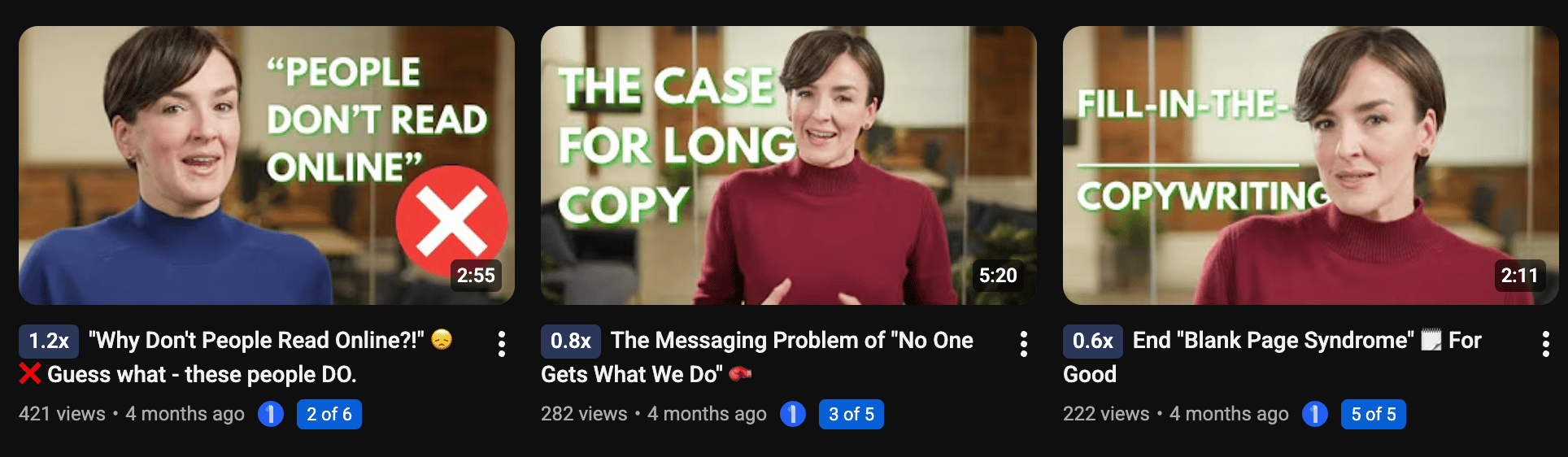
Nothing “dead” exactly, but definitely not a channel you’d study for growth.
Then out of nowhere, this happened:
- One video crosses 100,000+ views
- The next one does ~200,000
- The next: ~200,000 again
- Then one dip to 36,000
- Then straight back up to ~150,000
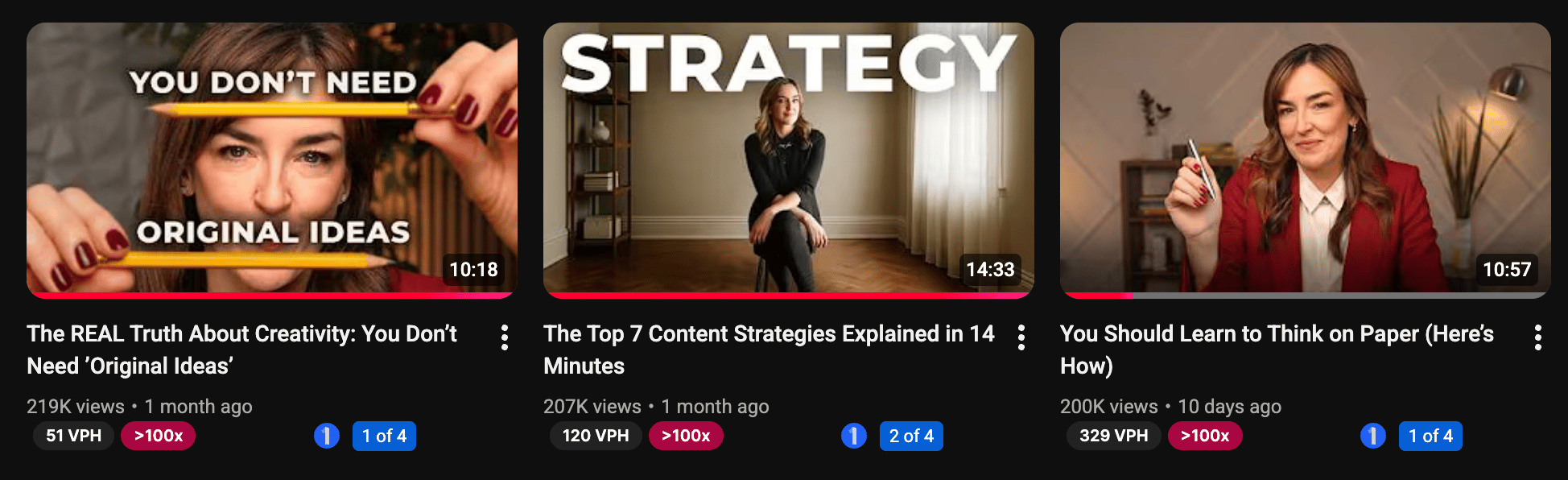
Same niche. Same person. Same channel.
Most people see that and think one of two things:
- “The algorithm finally blessed her channel,” or
- “My channel must be broken, I should probably restart.”
Both are wrong. And the second one is dangerous, because restarting usually doesn’t fix the real problem as it just resets the clock.
Once you see what actually changed, growth stops feeling like luck and starts feeling like a solvable video problem.
She kept the same channel, made a few critical changes to how she packaged and delivered her content, and the videos started winning.
And that’s the real lesson:
YouTube is a platform of videos, not channels
YouTube has been clear about this for years: the system evaluates each video on its own merits.
It’s basically asking:
- Do people click this?
- Do they keep watching?
- Do they watch more afterwards?
If YouTube truly flipped a switch on entire channels, graphs would just go up and to the right forever.
But you’ve seen it: one video at 500k or 1M… then the very next upload drops straight back to baseline.
Momentum starts at the video level first, not the channel level.
On this channel, two video-level changes explain almost everything.
1. The packaging finally looked like it belonged on YouTube
Old uploads:
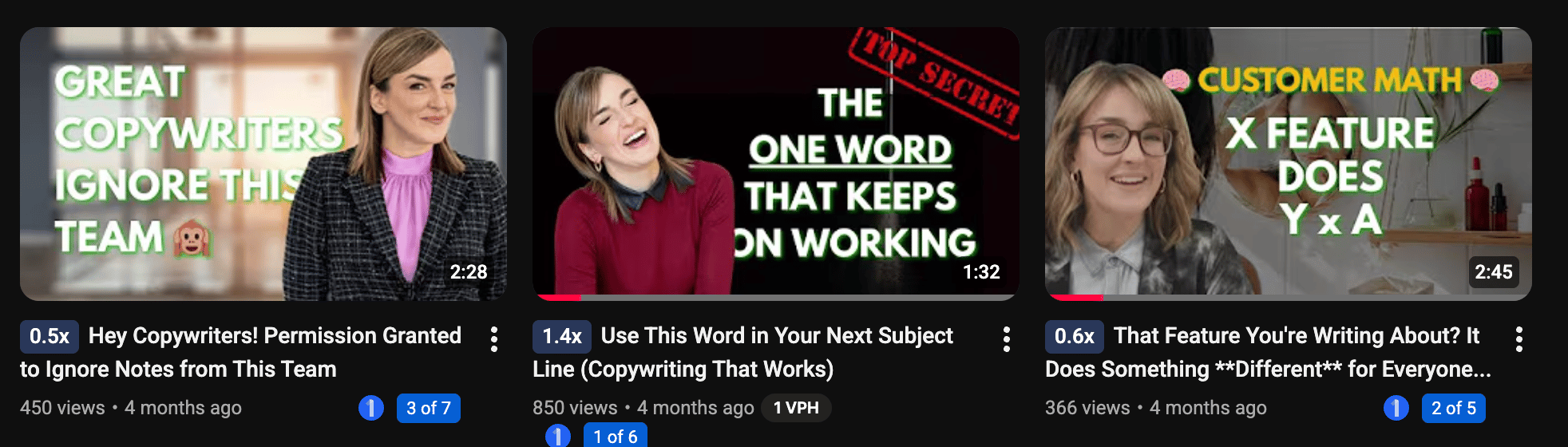
The thumbnails are dark, messy, include stock photos, random icons, tiny text etc.
The titles are long and vague:
- “Could your next high converting message be buried on your website?”
- “Trying to break into a market with a known leader? Try this value proposition.”
If you don’t already know her, there’s no reason to click. These don’t look interesting to a cold audience.
The job of a thumbnails isn't to just get someone to click it's also to signal effort and value. These older ones quietly communicated "low stakes, low reward.”
Now, compare that to the new uploads...
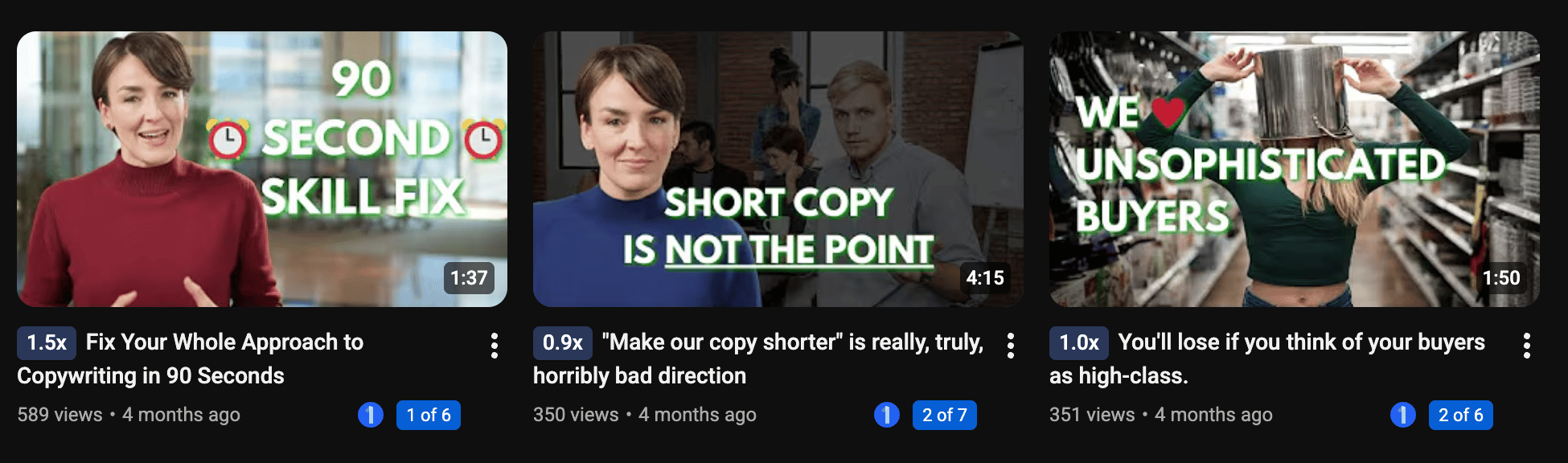
New uploads:
These thumbnails are clean, bright, they use studio shots with strong expressions with simple, readable compositions.
On the title front they promise a clear outcome:
- “What To Do When You Have ZERO Original Ideas”
- How to articulate your thoughts more clearly than 99% of people”
This is the same person, but better packaging. The perceived value of each video went way up before anyone even clicked.
2. She started making actual YouTube videos
The older stuff was 2–3 minutes long.
At that length, they’re basically Shorts pretending to be long-form. For educational content, that’s an awkward middle ground:
- Too short to really build momentum as a long-form video
- Too long to work well as a Short
The newer uploads are 10–14 minutes, with:
- Proper hooks
- Clear pacing
- Better audio, visuals, and structure
In other words, YouTube finally has something it can test:
- A compelling idea
- A clickable package
- Enough runtime for people to actually watch
When a video hits and viewers enjoy it, YouTube offers them another from the same channel. Momentum builds at the video level first, then spills over into the channel as people binge.
What this means for your channel
You do not need to:
- Delete your channel
- Start from scratch
- Wait for the algorithm to “like” you
You do need to:
- Commit to 1 new video per week for the next 12 weeks.
- Spend 80% of your effort on idea, title, and thumbnail.
- Make videos your audience actually wants, not what you feel like talking about that day.
- Stop optimizing for editing tricks and gear until you’ve nailed packaging and consistency.
Here’s the mental shift that simplifies everything:
Replace the word “algorithm” in your head with “audience.”
Not:
“What does the algorithm want right now?”
But:
“What does my audience desperately want from me right now?”
If you answer that well, package it clearly, and do it consistently… the “algorithm” takes care of itself.
Want to make 6 months of YouTube progress in a single day?
If you’d rather not figure this out alone, I’m running a 1‑day, in‑person YouTube intensive in London with two of the best strategists I know, George and Gwilym.

We’ll go deep on:
- Strategy & packaging (my session)
- Scriptwriting & retention (hosted by George Blackman)
- Systems & production (hosted by Gwilym Sims-Williams)
The goal is simple: help you make more strategic YouTube progress in one day than you would in 6 months of guessing.
You can grab one of the remaining seats here:
4 Tickets Left, Grab Your Seat Now
We’re grateful to our event sponsor:
Justin Moore: author of Sponsor Magnet.
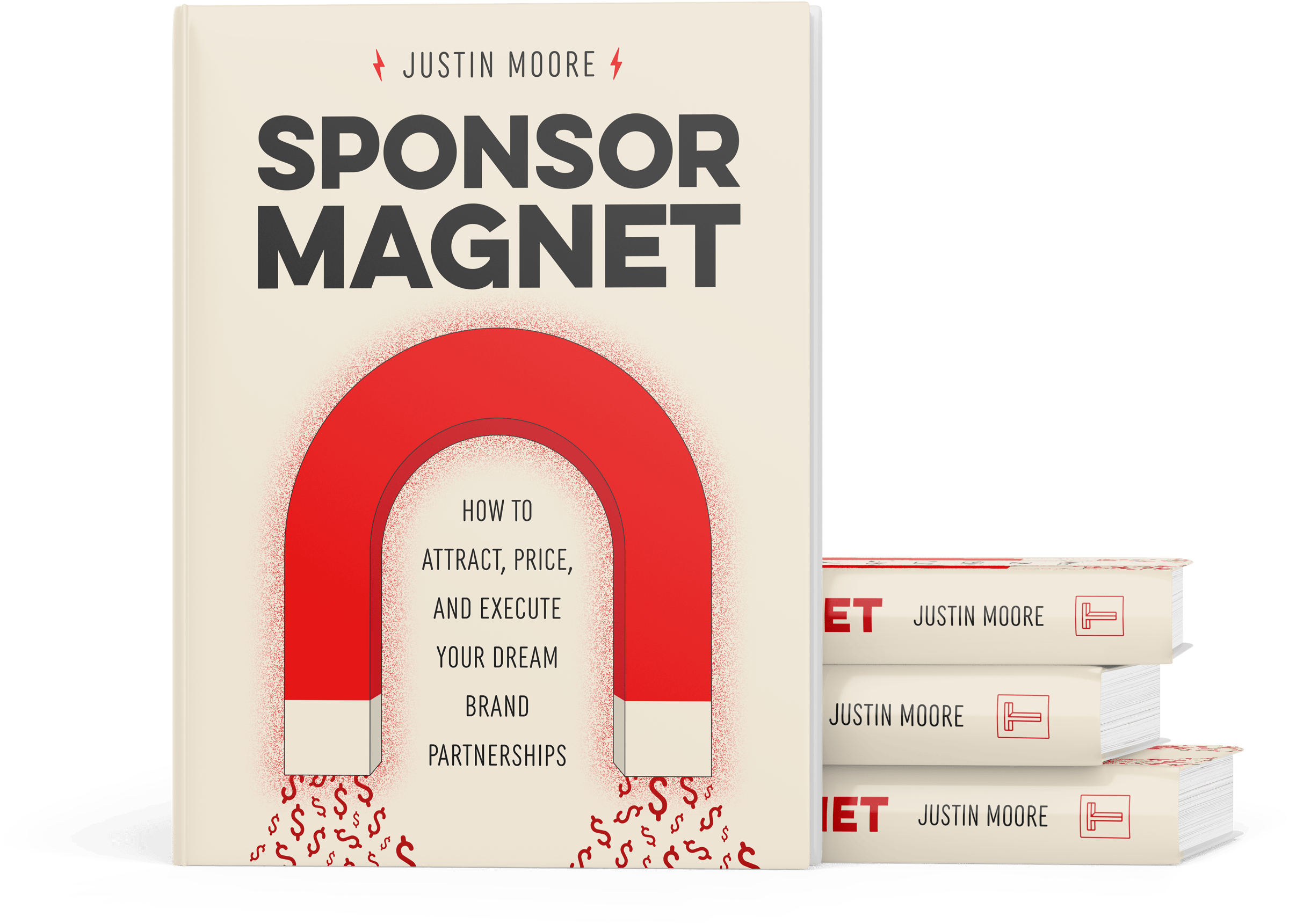
Every attendee will receive a free copy of Sponsor Magnet plus an exclusive offer from Justin on how to attract and close better brand deals.
Talk soon,
Jamie

Put these ideas into practice.
Get The Million-View Blueprint, my free five-day email course to help you make better YouTube videos.
You can read all my previous newsletters here →
Keep reading
A weekly dose of The Creator Stream, where we learn to craft irresistible video ideas and supercharge your titles & thumbnails! Join over 1,750 Creators!